Sleep Researchers' 2026 Guide to a Bedtime Routine That Sticks
Sleep researchers reveal why consistency beats duration in 2026. Build a bedtime routine that sticks with science-backed habits and top product picks.
The Sleep Crisis Is Worse Than You Think

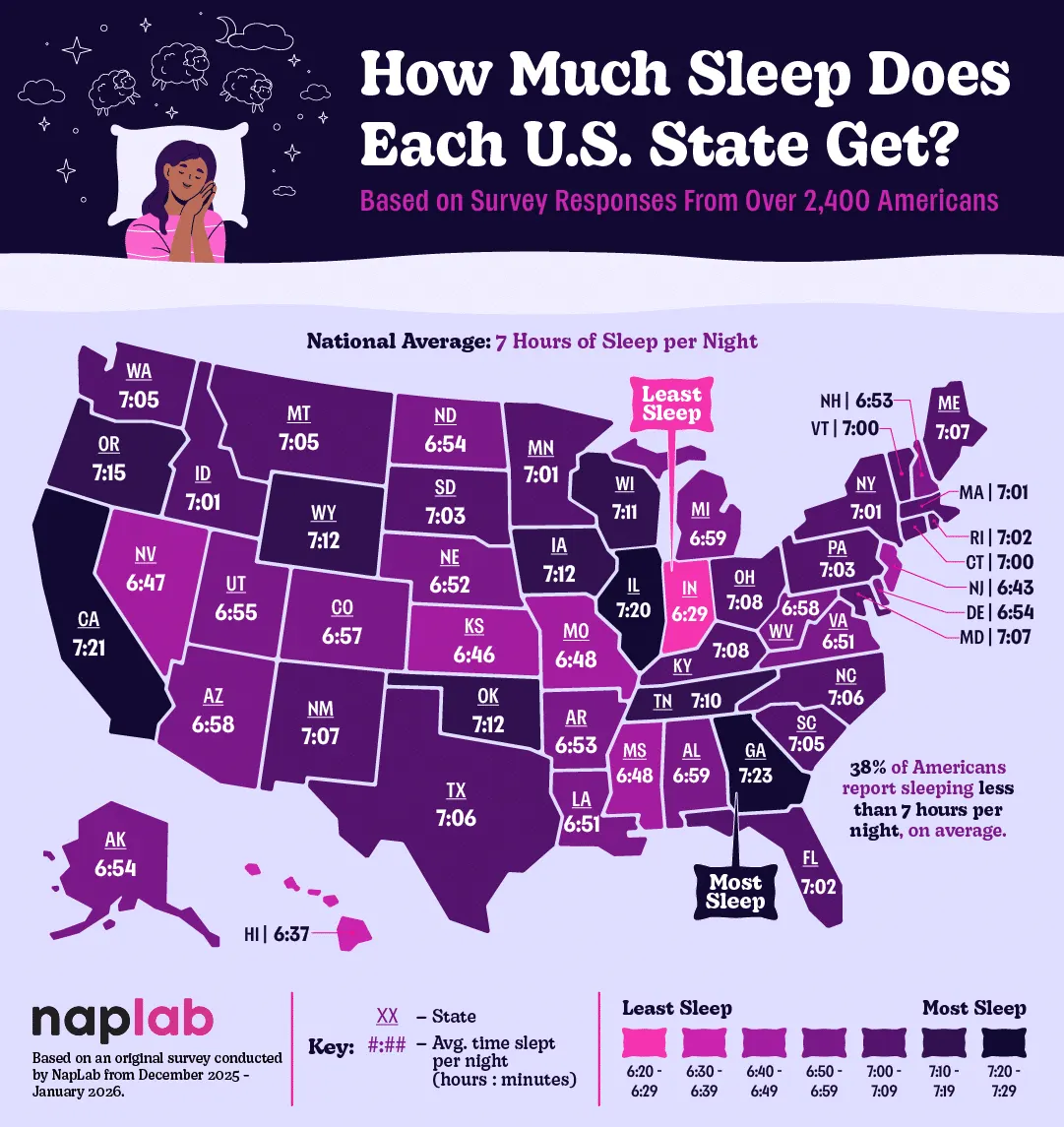
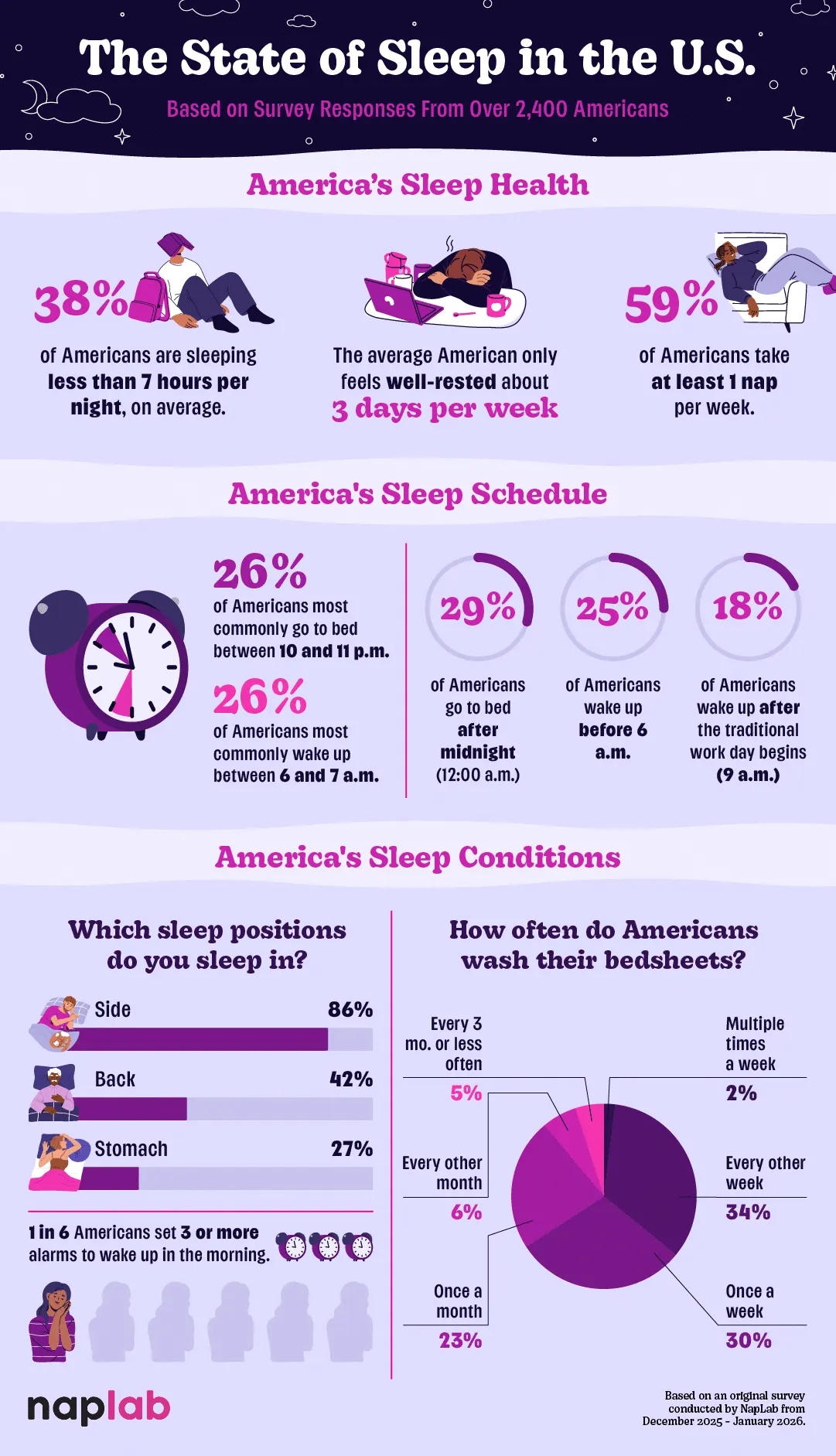
If you've ever stared at the ceiling at midnight wondering why you can't fall asleep, you're far from alone. According to the National Sleep Foundation's 2025 Sleep in America Poll, 6 out of every 10 adults don't get enough sleep, nearly 4 in 10 have trouble falling asleep three or more nights per week, and almost half struggle to stay asleep. Nationally, over one-third of U.S. adults (35%) fall short of the medically recommended minimum of 7 hours per night.
The downstream effects are staggering. Sleep deprivation costs the U.S. economy an estimated 1.23 million lost workdays per year. Adults dissatisfied with their sleep show a 31% rate of moderate-to-severe depressive symptoms, while those who are satisfied are 45% more likely to be flourishing by multiple measures of wellbeing. Sleep isn't a luxury. It's arguably the single highest-leverage health behavior you can change.
The #1 finding reshaping sleep science in 2026: consistency over duration
The shift that separates current sleep research from older advice: going to bed at the same time every night may matter more than how many hours you clock.
Researchers analyzed over 10 million hours of accelerometer data from nearly 61,000 UK Biobank participants and calculated each person's Sleep Regularity Index (SRI). The results were striking: people in the most consistent sleep group had a 30% lower risk of all-cause mortality and a 38% lower risk of cardiometabolic mortality compared to the least consistent sleepers. Across five separate population-based cohorts, irregular sleepers experienced 20 to 88% higher all-cause mortality than their more consistent counterparts, independent of how much sleep they got.
A large-scale Flinders University study reinforced the message: analyzing more than 28 million days of real-world health data from over 70,000 people globally, researchers found that fewer than 13% consistently hit recommended targets for both sleep and physical activity. The takeaway for your routine is simple but consequential. Pick a bedtime and protect it, even on weekends.
The hidden danger of a variable bedtime
It's not just about sleeping less. It's about sleeping unpredictably. Research published in the Journal of Medical Internet Research in December 2025 used digital activity trackers to link night-to-night bedtime fluctuation with serious health risks. People with high bedtime variability had more than twice the risk of sleep apnea and were 71% more likely to have high blood pressure. A separate UK Biobank longitudinal study found that higher variation in nightly sleep duration was independently associated with increased risk of myocardial infarction and stroke.
Social jetlag (staying up late on weekends and compensating mid-week) isn't a harmless quirk. It's a measurable health risk.
Screens before bed: the evidence is now overwhelming
You've heard the blue-light warning before, but 2025 to 2026 research has sharpened it considerably. A study published in JAMA Network Open in March 2025 found that adults who used screens before bed had a 33% higher rate of poor sleep quality than those who avoided them. The mechanism is well-established: evening blue light suppresses melatonin, delays your circadian clock, and prolongs how long it takes to fall asleep.
A 2025 lab study made this concrete: blue light exposure from 9 to 10:30 PM significantly reduced total sleep duration compared to earlier exposure. In a separate controlled trial published in Life (MDPI), participants exposed to blue LED light for three hours starting at 9 PM had melatonin levels of just 7.5 pg/mL after two hours, while those exposed to red light recovered to 26.0 pg/mL over the same period.
And it's not just your phone. Research in Scientific Reports (January 2026) found that cool white CFL and LED lamps may be as disruptive to sleep physiology as screens, while warm-toned or tunable lighting adjusted to warm settings measurably reduces the effect.
This is where smart product choices pay off in a real, physiological way.
Build the routine: products that support the science
A great bedtime routine doesn't require a complete lifestyle overhaul. It requires removing friction, making the right environment easy to fall into every night. Here are the tools sleep researchers' findings most directly support.
Warm smart lighting to replace harsh LEDs
Swapping out bright overhead lighting for a smart bulb you can dial to warm amber in the evening is one of the highest-ROI changes you can make. The Philips Hue White Ambiance bulbs let you schedule an automatic shift to 2,700K (warm white) or lower starting an hour before bed, precisely the "critical window" for melatonin protection identified in recent research. They're controllable by app, voice assistant, or automated schedule, so there's virtually no friction to using them correctly every night.
Blue light blocking glasses for evening use
If ditching screens entirely before bed isn't realistic, a quality pair of amber-lens blue light blocking glasses is the next best option. Look for lenses that filter wavelengths below 550nm, the range most directly linked to melatonin suppression. The Swanwick Swannies Blue Light Blocking Glasses are a well-regarded choice with an amber lens that covers the critical blue-spectrum range, making them suitable for evening wind-down, not just computer work.
A consistent sleep-tracking wearable
You can't optimize what you don't measure. Given that sleep regularity (not just duration) is now a primary predictor of health outcomes, having a device that tracks your sleep timing night over night is genuinely useful. The Oura Ring Gen 4 provides a daily Sleep Score alongside a "Sleep Regularity" metric, circadian alignment data, and resting heart rate trends. It's one of the most research-adjacent consumer sleep tools available in 2026, and its ring form factor means it won't disrupt sleep the way a bulky watch might.
A bedroom thermometer and smart thermostat
Research consistently points to a bedroom temperature of 60 to 67°F (15 to 19°C) as the optimal range for deep sleep. Overheating suppresses slow-wave sleep and increases nighttime wakings. A smart thermostat like the Ecobee Smart Thermostat Premium can be programmed to drop the bedroom to your target temperature 30 to 60 minutes before your consistent bedtime, automating one more variable so you don't have to think about it.
Putting it together: your 60-minute wind-down blueprint
The research points to a clear, practical framework:
- T-60 min: Dim lights to warm amber (or switch on your Hue bulbs' evening scene). Put on your blue light glasses if you're watching TV or scrolling.
- T-45 min: Lower the thermostat to your target sleep temperature.
- T-30 min: Put your phone in another room, or at minimum, enable Do Not Disturb and place it face-down. This is the single highest-leverage screen boundary.
- T-15 min: Engage in a consistent pre-sleep anchor activity, whether reading physical print, light stretching, journaling, or a brief meditation. The activity matters less than the consistency of doing it nightly, which trains your brain to associate the cue with sleep.
- Lights out, same time, every night. This is the non-negotiable. Even on weekends, try to stay within a 30-minute window of your target bedtime.
The bottom line
The sleep science of 2026 has delivered a message that's inconvenient but liberating: you don't need to sleep perfectly, you need to sleep consistently. A stable bedtime, a dark and cool room, and an honest relationship with screen light in the evening will do more for your long-term health than any supplement or sleep-tracking gadget on its own. The products above help remove the friction from each of those goals, making it easier to do the right thing automatically, every night.
Start with one change this week. Pick a bedtime. Set a lighting schedule. The data is clear on where that path leads.