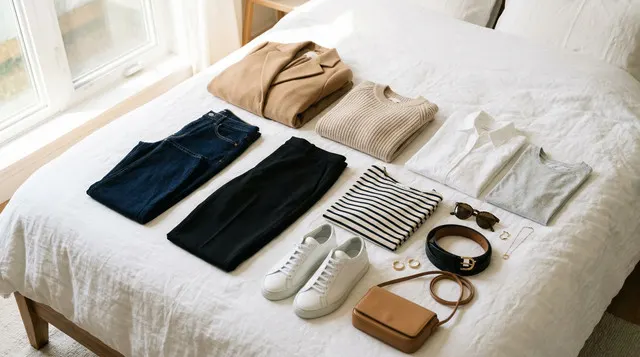
Dress Well on a Budget in 2026: 7 Rules That Actually Work
Dress well without overspending in 2026. These 7 practical rules — plus smart product picks — help you build a wardrobe that actually works for your life and your budget.
Dress Well on a Budget in 2026: 7 Rules That Actually Work
Americans spent $554 billion on clothing in 2024 and most of them still stand in front of a full closet every morning feeling like they have nothing to wear. That is not a spending problem. It is a strategy problem. Research consistently shows that the average person wears only about 20% of their wardrobe regularly. The other 80% is dead weight: impulse buys, duplicate basics, sale items that "were too good to pass up," and pieces that don't go with anything else they own.
Meanwhile, prices are climbing. U.S. apparel costs rose 3.8% between 2022 and 2025, with men's shirts and sweaters seeing some of the steepest spikes. In Q1 2025, 37% of consumers said they planned to cut back on clothing spending. The moment is ripe for dressing smarter, not cheaper in the lazy sense, but more intentionally. Here are seven rules that actually work.
Rule 1: Audit your closet before you buy anything
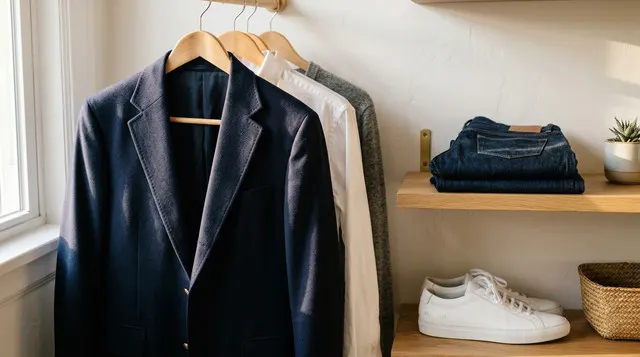
The single most valuable thing you can do costs nothing. Pull everything out. Remove items that don't fit your current body. Set aside anything you haven't worn in two years. Let go of pieces that feel almost right but never actually get chosen.
What's left is your real wardrobe, and the gaps that remain are your real shopping list. Editing protects your budget by stopping you from solving the wrong problem. Most people buy more when what they actually need is clarity.
Rule 2: Master the cost-per-wear formula

Stop thinking about price tags. Start thinking about cost per wear (CPW): divide what you paid (plus care costs, minus resale value) by the number of times you'll actually wear it.
- A $200 jacket worn 50 times = $4 per wear ✅
- A $50 dress worn twice = $25 per wear ❌
- A $300 coat worn 720 times over 5 years (with care costs factored in) = under $1 per wear, which is exceptional value
The benchmark: anything under $5 per wear is likely a smart buy. Under $1 per wear is outstanding. Fast fashion looks cheap upfront, but a $25 pair of jeans that falls apart after 40 wears costs more per wear than a $120 pair worn 300 times. One resale platform found that second-hand clothes are 33% cheaper in the long run than new fast fashion, once you run the numbers.
Rule 3: Build around a capsule core
A capsule wardrobe is not a minimalist aesthetic. It is an efficiency system. With 20 to 30 well-chosen pieces (not counting intimates, activewear, or sleepwear), you can generate dozens of distinct outfits. The global capsule wardrobe market hit $1.3 billion in 2023 and is projected to double by 2030, so this is well past fringe territory.
The test for every piece you consider: does it connect to at least four other things you already own? If it only pairs with one or two items, it is a specialty piece, not a capsule anchor.
Rule 4: Start with the white shirt
No single item does more work across more occasions. A well-fitting white shirt can go under a blazer, be tucked into trousers, worn open over a tee, or knotted at the waist. The 2026 sweet spot is a linen or linen-blend version. It breathes, it wrinkles in a way that looks intentional, and it holds up wash after wash.
Uniqlo's linen blend shirt ($25 to $30) is the budget champion here. The fabric is genuinely good for the price, the fit is clean without being boxy, and it comes in enough colors to build a small collection without guilt.
If you want a step up in construction and fabric weight, Arket's cotton-linen shirt ($45 to $55) is the best quality available at this price point. Structured enough to wear to a meeting, relaxed enough for a weekend.
Rule 5: Invest in one great pair of jeans
Jeans are among the highest-value items in any wardrobe by CPW math. An $80 pair worn 15 times a month for two years reaches 360 wears, putting the cost at well under $0.50 per wear. The key is buying once and buying right: a dark or mid wash, a straight or slim-straight leg, and a rise that works with both tucked shirts and untucked tees.
Levi's 511 Slim Fit Jeans remain one of the most reliable values in men's denim in 2026. Consistent sizing, durable construction, and a silhouette that reads polished rather than purely casual. For women, the Levi's 724 High Rise Straight hits the same notes.
Rule 6: Get your footwear right (it changes everything)
Shoes make or break an outfit more than any other element, and they are where most budget dressers make their worst CPW mistakes: buying cheap shoes repeatedly instead of one good pair. The loafer is the 2026 workhorse. It bridges smart and casual, works with jeans or trousers, and reads as effortlessly put-together.
& Other Stories leather loafers ($65 to $85) punch well above their price. The leather holds up with basic care, and the silhouette is classic enough to stay relevant for years.
Rule 7: Shop the resale market strategically
Resale is not just about saving money. It is about accessing quality levels that would otherwise be out of budget. A well-maintained wool blazer or leather bag from a resale platform can cost 40 to 70% less than new, with a CPW that beats almost anything purchased at retail.
The strategy: identify the specific brands and pieces you want first, then search for them on platforms like ThredUp, Poshmark, or eBay. Avoid browsing resale the same way you would browse a sale rack. That is how you end up with more things that don't connect. Targeted searching is what makes it work.
The bottom line
Dressing well on a budget in 2026 is not about buying the cheapest option or never spending money on clothes. It is about spending deliberately, on fewer, better pieces that you will actually reach for. Audit what you have. Calculate what things really cost you. Build a wardrobe where everything connects. Do that consistently, and you will spend less, look better, and finally stop feeling like you have nothing to wear.