Best Packing Cubes 2026: Tested—Do They Actually Save Space?
We tested the best packing cubes of 2026 — here's the honest truth about whether they actually save space, plus our top picks for every traveler.
Best Packing Cubes 2026: Tested, Do They Actually Save Space?
If you've spent any time in a travel forum or watched a single "how to pack light" video, you've heard the gospel of packing cubes. Devoted fans swear they're life-changing. Skeptics call them just another thing to stuff into your already-stuffed bag. After digging into real testing data and hands-on reviews, here's an honest verdict and a ranked list of the best packing cubes you can actually buy in 2026.
Do packing cubes actually save space? The honest answer
Get this out of the way first, because the marketing around packing cubes can be misleading.
Regular packing cubes do not make your clothes smaller. What they do is help you use every inch of your suitcase more efficiently. Instead of lumpy, shapeless piles leaving random air pockets, you're fitting firm rectangular blocks together like Tetris pieces. Most real-world tests put the space savings from standard cubes at around 5 to 10 percent, enough to pack tidier, not enough to squeeze in extra outfits. One AAA Club Alliance test found that a suitcase barely closed over standard packing cubes and actually took up more space than a simple rolling method.
Travel expert Michelle Jensen, founder of Travel HerStory, puts it plainly: "Standard cubes don't actively save space."
Compression packing cubes are a different story. These have two zippers: one to close your clothes inside, and a second that cinches the cube down, forcing out excess air. The result is genuinely impressive. Compression cubes can reduce clothing volume by 20 to 50 percent, and for bulky items like sweaters and jeans, the gains are even more dramatic. Jensen cites a 30 to 60 percent volume reduction depending on what you pack.
That said, there are real trade-offs worth knowing:
- Wrinkles: Compressed clothes come out more wrinkled. If you're packing dress shirts or blouses, plan to steam or iron on arrival.
- Weight: Quality compression cubes can add 1 to 2 pounds to your bag, a real concern for carry-on-only travelers on strict airline weight limits.
- Sizing chaos: There's no industry standard. A "large" cube from one brand might hold 14 liters; another brand's "large" could hold only 8. Always check liter capacity, not just size labels.
The bottom line: compression cubes are worth it for casual and adventure travelers packing bulky items. Standard cubes are better for organization and wrinkle-sensitive wardrobes.
The best packing cubes of 2026
Best overall: Peak Design Packing Cube Medium
If you want the most thoughtfully engineered compression cube on the market, Peak Design is the answer. The Medium cube holds 18 liters and compresses down to 8 liters, cutting volume roughly in half. It's built from 70-denier Ripstop Nylon with YKK zippers and Peak Design's signature self-healing UltraZip. In testing, Pack Hacker accidentally punctured the fabric and watched it return to normal. That's a level of durability that justifies the roughly $50 price tag.
The clamshell peel-back lid makes packing and unpacking fast, and a built-in clean/dirty divider means you can use the same cube for fresh and worn clothes without mixing them. Pack Hacker scores it 8.2/10, making it their top compression pick. The trade-off is price: at roughly $40 per medium cube, building out a full set adds up quickly.
Best value: Eagle Creek Pack-It Isolate Compression Set
Eagle Creek has been making travel gear since 1975, and their Pack-It Isolate Compression Set reflects that experience. At $48.99 for a set (versus $40 or more for a single Peak Design cube), the value is hard to argue with, and it comes backed by Eagle Creek's lifetime warranty.
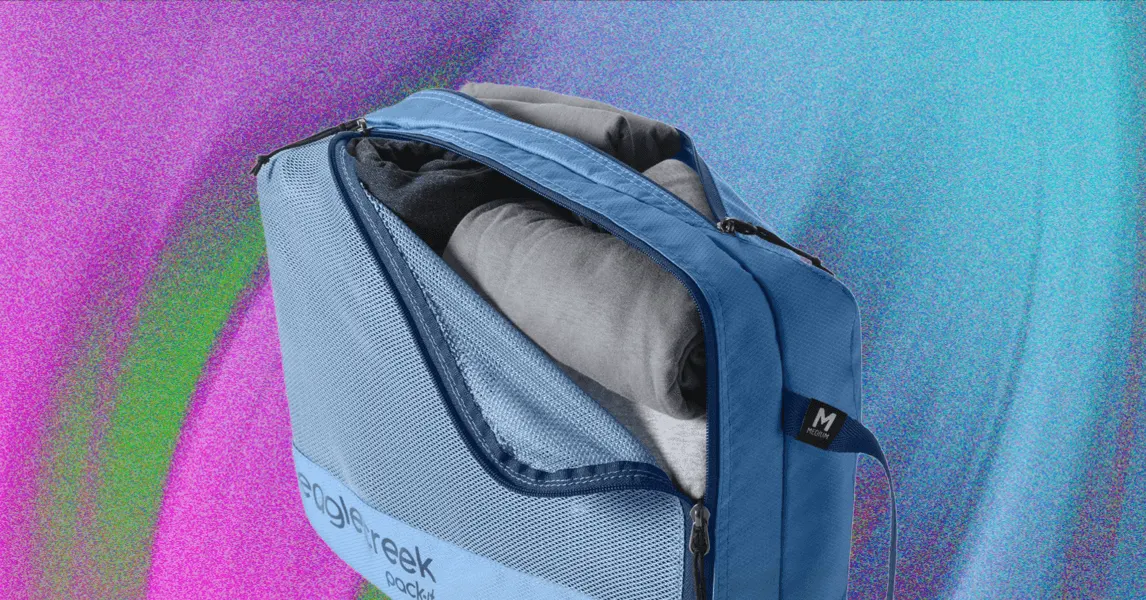
The compression zipper on the Isolate visibly pulls the cube down smaller, and the water-resistant, enclosed construction keeps clothes isolated from spills and odors. Pack Hacker's April 2026 update elevated the Isolate to their best overall pick (8.0/10), noting a market shift toward enclosed, water-resistant cubes as mesh panels lose favor among frequent travelers who want true separation between clean and dirty items.
If you're building a packing cube kit for the first time and don't want to spend $150 or more, start here.
Best for maximum compression: Thule Compression Cube Set
For sheer packing density, the Thule Compression Cube Set (around $45) is the standout. In GearJunkie's April 2026 testing, the small Thule cube compressed 10 pairs of boxer briefs, a full 10-day supply, down to roughly the size of a hardball. That's the kind of compression that makes a genuine difference on long trips where you're trying to live out of a single personal item.
The Thule set hits the sweet spot of aggressive compression and reasonable price, and Thule's reputation for durable outdoor gear carries over here. If your priority is fitting as much as humanly possible into your bag, this is your cube.
What to look for when buying packing cubes
Before you add anything to your cart, run through this quick checklist:
- Compression or standard? For bulky items and maximizing space, go compression. For delicate or wrinkle-prone clothing, go standard.
- Check liter capacity, not size labels. A "medium" varies wildly between brands. Look for the actual volume in liters.
- Match to your bag. Measure your suitcase or backpack interior and compare to the cube's dimensions before buying.
- Weight matters. If you fly carry-on only with strict weight limits, factor in the 0.5 to 2 pounds the cubes themselves add.
- Warranty. Eagle Creek's lifetime guarantee is exceptional. Most others offer 1 to 2 years.
The big picture
The packing cube market hit somewhere between $950 million and $1.3 billion in 2024 and is on track to roughly double by 2033, driven by budget airlines, adventure tourism, and a generation of minimalist travelers who want to do more with less bag. That growth reflects a real shift in how people travel.
But the best packing cube for you depends entirely on what you're packing and how you travel. Compression cubes are genuinely transformative for bulky gear and long trips. Standard cubes are underrated for keeping a bag organized without adding complexity. Either way, the organizational benefit alone, knowing exactly where everything is without unpacking your entire bag, is worth the investment for most travelers.
Pick one of the three above, try it on your next trip, and you'll have your own honest answer.