Best Blue Light Glasses 2026: Stylish Picks That Actually Work
Discover the best blue light glasses of 2026 — stylish, science-backed picks for screen-heavy days, honest research, and expert buying advice.
Best blue light glasses 2026: stylish picks that actually work
If you've spent any time doom-scrolling wellness content lately, you've probably seen blue light glasses everywhere: perched on the noses of productivity influencers, tucked into "night routine" TikToks, and bundled into every optometrist's upsell pitch. With global screen time now averaging over 10 hours a day, it's no surprise the category has exploded. The non-prescription blue light glasses market grew from $3.11 billion in 2021 to $4.54 billion in 2025, and it shows no signs of slowing.
But do they actually work? And if so, which pairs are worth buying in 2026? We dug into the latest research and rounded up the stylish picks that hold up to scrutiny.
What the science actually says (no hype, no fear-mongering)
To be upfront about this: that's the only way the article is useful to you.
The most rigorous analysis to date, a 2023 Cochrane systematic review of 17 randomized controlled trials, concluded that blue light glasses probably make no measurable difference to eye strain or sleep quality in everyday use. It's also worth noting that computer screens emit roughly one-thousandth of the blue light you'd absorb stepping outside on a sunny afternoon. The marketing has gotten well ahead of the science.
That said, the picture in 2026 is more nuanced than a flat "they don't work."
- A 2026 peer-reviewed study in SAGE Journals found that symptoms like eye redness, blurred vision, and dry eyes were consistently rated as less severe during a blue-light-filtering lens phase, particularly in screen-intensive work environments. Researchers cautioned that digital eye strain is multifactorial, and ergonomics and screen brightness matter just as much.
- A 2026 long-term study on PubMed found that 85% of participants reported improvement in at least one symptom, with lens use of 12 or more months and adherence to the 20-20-20 rule being the strongest predictors of relief.
- Evening use has the clearest theoretical support. Blue light exposure suppresses melatonin production and can delay sleep onset. Wearing blue-light-blocking glasses for 90 minutes before bed has been linked to reduced anxiety and improved subjective sleep time in at least one study combining lens use with cognitive behavioral therapy for insomnia (CBT-I).
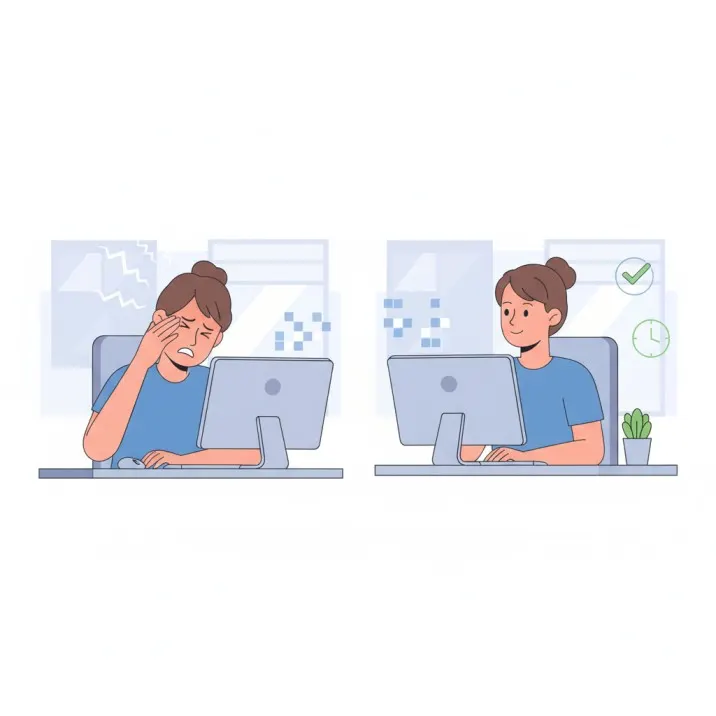
The honest bottom line: Blue light glasses are unlikely to be a silver bullet for digital eye strain. The real culprits (reduced blinking, poor ergonomics, screen glare, and outdated prescriptions) need to be addressed regardless. But for heavy screen users, especially in the evenings, a quality pair may offer real, if modest, comfort benefits. And if they help you feel better at your desk, that's a legitimate quality-of-life win.
What to look for when buying
Before we get to the picks, here's what separates a genuinely useful pair from a glorified fashion accessory:
- Lens filtering method: Infused lenses (blue light filtering built into the lens material) tend to outperform surface coatings, which can wear off or create distortion over time.
- Filtering percentage: Most consumer lenses filter 20 to 50% of blue light. Higher percentages (often with a yellow or amber tint) are more appropriate for evening use; clearer lenses suit daytime office work.
- Anti-glare and UV400: These coatings reduce overall visual fatigue and protect against UV, making them genuinely useful extras.
- Fit and comfort: Spring hinges, lightweight acetate or stainless steel frames, and proper sizing make a real difference if you're wearing them for 6 to 8 hours a day.
- Prescription availability: If you already wear glasses, look for brands that offer prescription blue light lenses without dramatically upcharging.
The best blue light glasses of 2026
Felix Gray: best for office use and color-sensitive work
Felix Gray is the name that comes up most consistently across 2026 eyewear roundups, and for good reason. Rather than applying a blue light coating on top of the lens, Felix Gray infuses the filtering directly into the lens material, so the protection is consistent across the entire surface and won't degrade over time. Their lenses filter approximately 50% of blue light while maintaining true color rendering, which makes them especially well suited for designers, photographers, or anyone doing color-sensitive work at a screen. Frames are made from quality acetate and stainless steel with spring hinges for all-day wearability. Non-prescription starts at $95; prescription blue light lenses start at $145. Every pair also includes anti-glare coating and UV400 protection. If you want one pair that handles both office hours and evening wind-down, Felix Gray is the go-to.
Warby Parker: best stylish all-rounder with prescription options
Warby Parker has quietly become one of the most accessible and stylish options for adding blue light protection to a prescription pair. Their "Blue Light Glasses" collection, available across a wide range of frame styles, uses a blue-light-filtering lens coating suited to everyday wear. What sets Warby apart is the seamless integration into their existing prescription and home try-on ecosystem: you can get your blue light upgrade without paying a steep premium or visiting a specialty shop. Pricing for non-prescription blue light lenses starts around $95, putting it in line with dedicated blue light brands. If you care as much about the look as the function and want the option to add a prescription, Warby Parker remains a top pick in 2026.
Gunnar Optiks: best for gaming and extended screen sessions
Gunnar Optiks has been making blue light blocking glasses longer than almost anyone, and they've refined their product specifically for the heaviest screen users: gamers, coders, and anyone pulling long digital hours. Their lenses use a proprietary amber tint that filters a higher percentage of blue light than most clear-lens competitors, which makes them better suited for marathon sessions where reducing eye fatigue matters more than color accuracy. The trade-off is real: the yellow tint isn't for everyone, and some users find it jarring at first. But if you're logging 8 or more hours of screen time daily or gaming into the late evening, the stronger filtering genuinely pays off. Gunnar frames are also built for comfort over long wear, with lightweight materials and nose pads designed for extended use. Prices typically range from $50 to $150 depending on the frame style.
Zenni Optical: best budget pick
Not everyone wants to spend $100 or more on a pair of glasses they're not sure will make a difference. Zenni Optical solves this problem neatly: their "Blokz" blue light lens upgrade can be added to virtually any frame in their catalog for a modest upcharge, bringing total costs for a complete pair down to as little as $20 to $40. The Blokz lenses use a blue-light-blocking coating rather than an infused lens, but for occasional use or for someone just testing the waters, that's an entirely reasonable trade-off. Zenni also offers prescription Blokz lenses, making them one of the most affordable ways to combine vision correction with blue light protection. The frame selection is vast, covering everything from minimalist rectangles to bold acetate styles.
Diff Eyewear: best for fashion-forward buyers
If aesthetics are non-negotiable for you, Diff Eyewear deserves a spot on your shortlist. The brand has built a loyal following by pairing genuine blue light filtering technology with frames that look like they belong in a fashion editorial rather than a corporate office. Their "Blue Light" collection spans oversized square frames, retro rounds, and sleek aviators, all with scratch-resistant, anti-reflective blue light lenses. Diff also runs a buy-one-give-one charitable model, donating a pair of glasses for every purchase. Pricing typically falls between $75 and $110. If you've been reluctant to wear blue light glasses because you don't want to sacrifice your personal style, Diff is the brand most likely to change your mind.
Habits that actually move the needle (use these alongside your glasses)
Even the best pair of blue light glasses works better as part of a broader digital wellness routine. Evidence strongly supports these complementary habits:
- The 20-20-20 rule: Every 20 minutes, look at something 20 feet away for 20 seconds. This is one of the most robustly supported interventions for reducing eye fatigue, and in the 2026 PubMed study, adherence to this rule was nearly twice as predictive of symptom relief as lens use alone.
- Proper screen ergonomics: Position your monitor an arm's length away and slightly below eye level to reduce strain on your ciliary muscles and neck.
- Screen brightness and night mode: Use your device's night mode or f.lux after sunset to reduce blue light output at the source.
- Blink consciously: Screen use reduces blink rate by up to 60%, contributing significantly to dry eye symptoms.
- Get your prescription checked: An uncorrected or outdated prescription is a major hidden driver of digital eye strain.
The bottom line
Blue light glasses in 2026 occupy an interesting space: the science is more cautious than the marketing, but that doesn't mean they're useless. For office workers and heavy screen users, especially those who struggle with sleep after late-night device use, a quality pair from a reputable brand is a low-risk, potentially meaningful addition to your wellness toolkit. Just don't expect them to fix everything. Pair them with good habits, proper ergonomics, and an up-to-date prescription, and you've got a genuinely solid strategy for protecting your eyes in a screen-saturated world.